
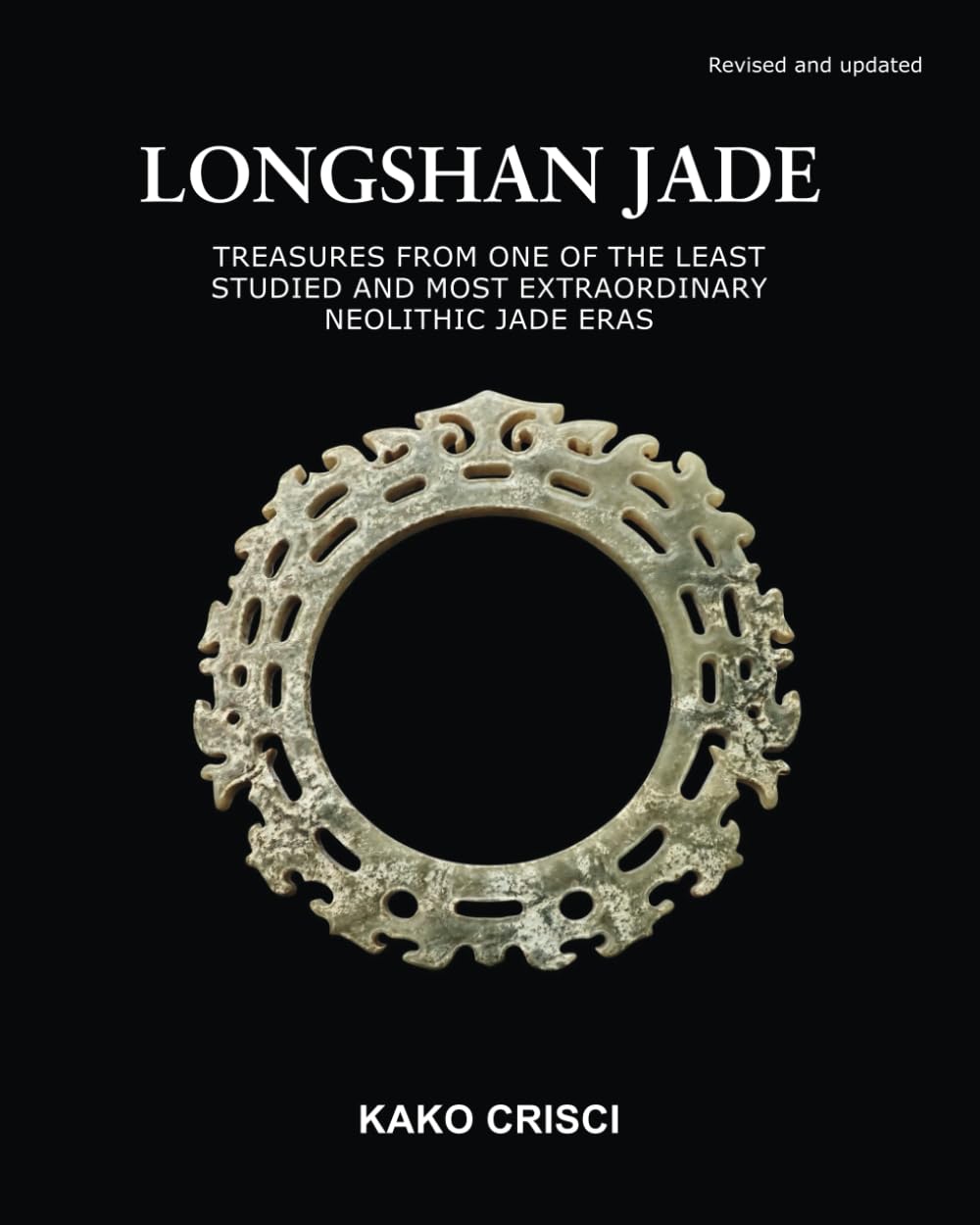
Longshan Jade Paperback – June 29, 2021
Product details
| Management number | 219233058 | Release Date | 2026/05/03 | List Price | $30.00 | Model Number | 219233058 | ||
|---|---|---|---|---|---|---|---|---|---|
| Category | |||||||||
The cultural landscape of the middle-lower Yellow River valley andcoastal areas in the third millennium B.C. has been identified as thecradle of Chinese civilization. It was the home of the legendary ThreeSovereigns and Five Emperors period, which commonly signified thebirth of Chinese civilization, roughly 4,000-6,000 years ago.The Central Plains Region, not too far away from the first dynasty, Xia(2,100-1,600 B.C.), was also a historic territory of the Longshan era (EarlyLongshan 3,000-2,600 B.C., Late Longshan 2,600-1,900 B.C.) and wasan essential component of both primordial and prehistoric civilization.Legendary mythologies derived from there taught people how to ignitea fire, cultivate farmlands, build houses, use herb medicines, establish acomplex political organization, and possibly, write and count.The 1980s saw additional discoveries of the Hongshan Culture in thenortheast and the Liangzhu Culture in the southeast, providing evidencefor scholars to further trace the origins of Chinese civilization. Since then,there have been debates concerning the veracity of the old idea thatChina’s Central Plains were the sole cradle of the country’s civilization.Nonetheless, the Three Sovereigns and Five Emperors were still believedas the direct common ancestors of the Chinese.Ancient jade was crucial to the development of society throughout theLongshan period. In addition to being used in religious rituals and as amaterial for sculpting statues of important political and social figures,jade was also considered a conduit to the gods. The Jade Renaissancehad arrived. Occurring between the Stone Age and the Bronze Age,there is no other country or culture in antiquity that can match China’sJade Age.This is the first English-language book dedicated to the Neolithic jadeartifacts known as Longshan Jade, and it features more than eighty-one images and photographs of these magnificent pieces of art. Alongwith detailed background, it showcases the exquisite craftsmanship andaesthetic value of Longshan jade from the heyday of jade culture inChina and introduces it to the West. Splitting the area in half, the westernregion is home to the Qijia, Taosi, and Shimao Neolithic cultures while theeastern region is home to the other five major Neolithic civilizations of theregion (Dawenkou, Shijiahe, Henan Longshan, Shandong Longshan, andErlitou). Although Dawenkou is a predecessor of Longshan and Erlitouis a descendant of Longshan, by arranging the jade cultures from thesame region successively and describing the personalities, social roles,and cultural significance of those Neolithic jade artifacts, it not onlyprovides readers with the most recent research from reputable scholarsbut also offers some general guidelines on how to read the Neolithic jadesfrom different regions. By dissecting each piece’s production process inminute detail, the author provides not only a means by which readerscan learn to recognize a work of genius but also, by drawing parallels tomodern-day globalization, evidence of the constant cultural exchangesthat characterize the Neolithic period. Read more
| ISBN13 | 979-8305509700 |
|---|---|
| Language | English |
| Publisher | Independently published |
| Dimensions | 8 x 0.4 x 10 inches |
| Item Weight | 15.5 ounces |
| Print length | 168 pages |
| Publication date | June 29, 2021 |
Bestseller ranking
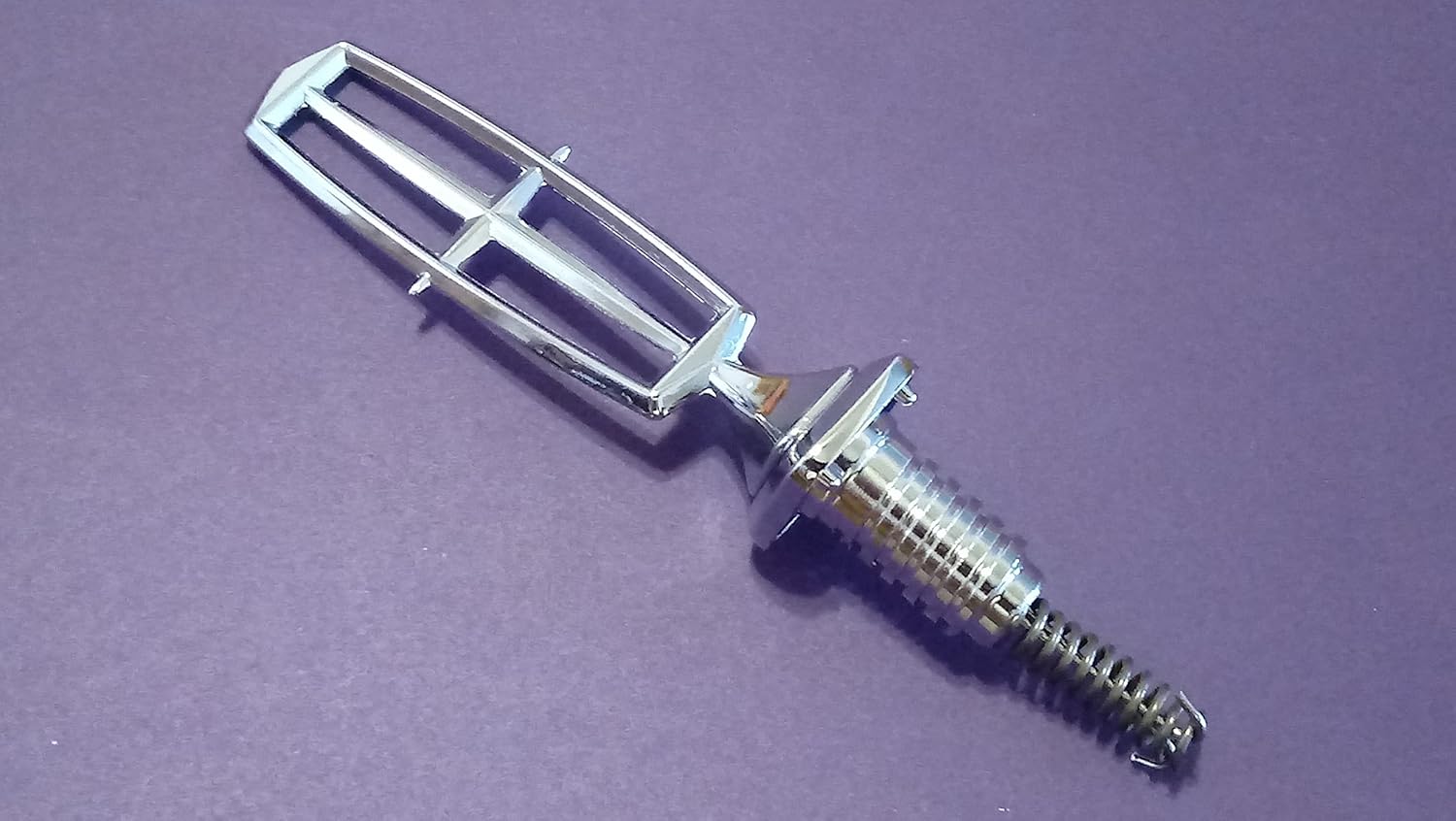
Hood Ornaments




Customers who viewed this product also viewed
China




Correction of product information
If you notice any omissions or errors in the product information on this page, please use the correction request form below.
Correction Request Form